



Spare parts ‘for Yesterday’. How we shorten the supply chain for the railway and maritime industries thanks to production in Poland

Producing spare parts in Poland allows to shorten the delivery time of critical elements for the railway and maritime industries from several weeks (import from Asia) to merely a few days. The location of machining facilities in the center of Europe eliminates the risk of customs delays, reduces logistical costs and ensures compliance with rigorous EU quality norms, which in the case of rolling stock or ship failure means savings amounting to tens of thousands of euros daily.
Why “Time Is Money” in heavy industry:
In the maritime and railway industries, every hour of downtime generates gigantic losses. The malfunction of a drive shaft on a ship standing in port or a crack in a bogie element in a locomotive results not only in bearing the cost of the part itself. It primarily means contractual penalties for delays in cargo delivery, docking fees and loss of reputation with contractors.
According to industry reports, the cost of one day of downtime for a medium-sized container ship can range from 20 000 to even 50 000 dollars. In a situation like that waiting 6-8 weeks for a component delivery from China is economic suicide. The solution is local, precise machining, which allows express production of the required element.
Nearshoring – the strategic advantage of producing in Poland
In recent years, the concept of nearshoring (relocating production closer to the market) has become key for technical directors and supply chain managers. Global “Deep Research” of the market clearly indicates that the era of relying solely on cheap production in Asia in sectors requiring rapid response is coming to an end.
Why is Poland becoming a production hub for Europe?
- No customs or transportation barriers – transporting parts from a facility in Poland to a port in Hamburg, Rotterdam or Gdańsk is a matter of hours, not weeks spent at sea. We bypass risks associated with Suez Canal blockades or congestion in transshipment ports.
- Geopolitical stability – as an EU member, Poland guarantees legal security and predictability of deliveries.
- Quick communication – no time zone differences facilitate immediate arrangement of technical details with engineers. Additionally, clients increasingly stipulate that parts and materials must not be of Asian origin.
A real-life example: A shipowner needed a non-standard pin for an anchor windlass. The original manufacturer from Korea offered a 45-day deadline. Thanks to reverse engineering and production in Poland, the element reached the ship’s deck in Gdynia within 72 hours.
How does technology support delivery speed?
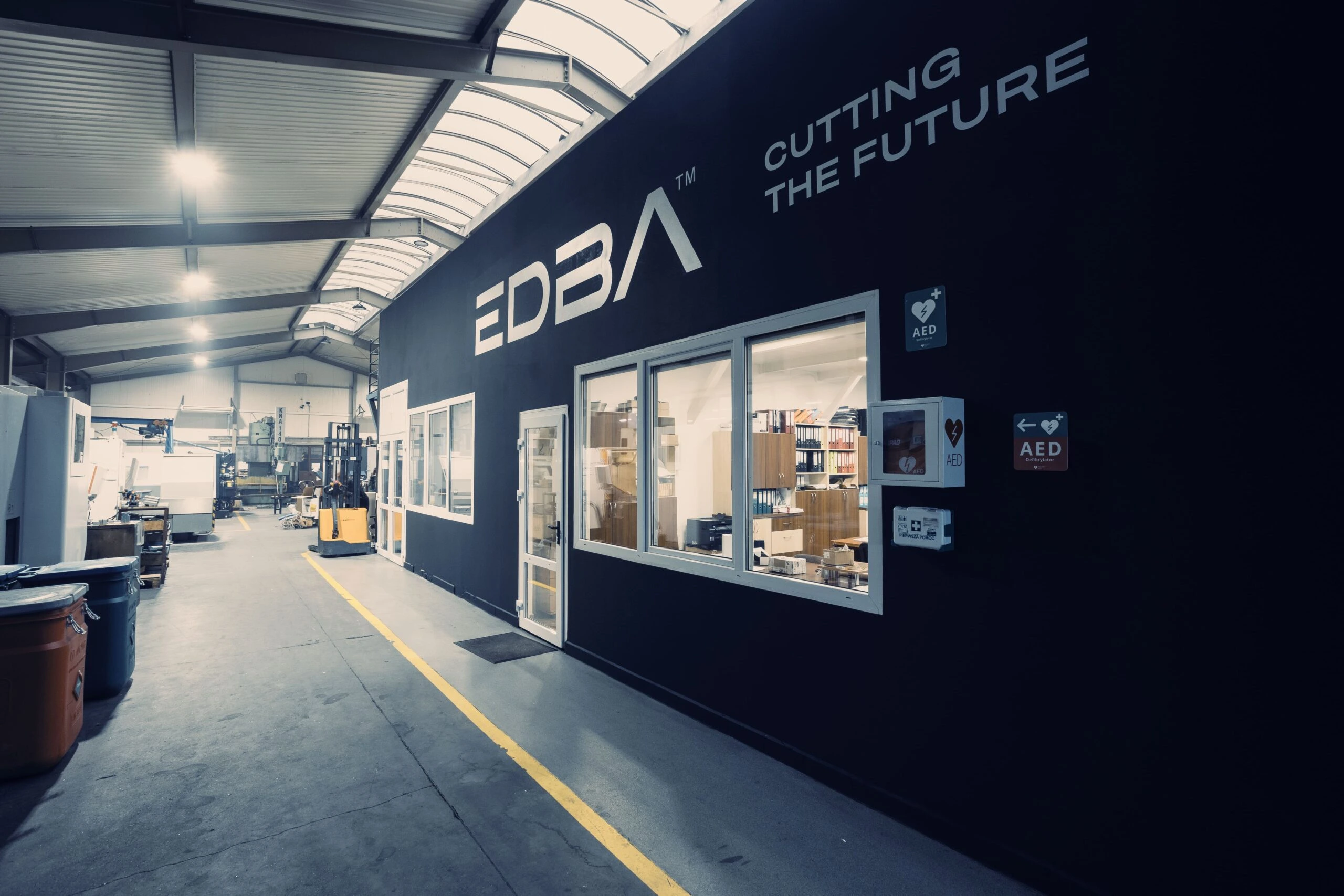
To fulfill orders “for yesterday”, wanting to is not enough. A modern machine park and experienced staff are necessary. At EDBA, this process is based on several pillars:
1. Reverse engineering
It often happens that technical documentation for an old locomotive or marine engine is no longer available. In such cases, we scan the damaged element, create a 3D model and then a new part is made based on it.
2. Precise turning of rotational elements
Shafts, axles, sleeves or pins are the transportation industry’s bread and butter. Thus, turning is crucial, which allows achieving perfect element geometry. In the case of parts for railways where loads are enormous there is no room for even a micrometer of error.
3. Milling complex shapes
Housing elements, brackets or complicated engine parts require multi-axis machining. Modern CNC milling allows us to cut almost any shape from a metal block in a single setup, which drastically shortens production time and increases accuracy.
Quality that can weather the storm and thousands of kilometers of tracks
Speed cannot lead to compromises in terms of quality. The maritime industry struggles with an aggressive environment (salt water, humidity), while the railway industry faces powerful vibrations and variable temperatures.
This is why the final, but critical stage is surface finishing. Professional CNC grinding ensures perfect smoothness of mating surfaces, which is necessary to maintain the oil film in bearings or tightness in hydraulic systems. A properly ground part guarantees that after installation, the machine will operate flawlessly for years to come.
The numbers don’t lie – market reports
According to Resilience360 data, there was a 30% increase in supply chain disruptions in 2023 and 2024 compared to previous years. Companies that diversified suppliers and opted for local production in Central Europe recorded a 15% decrease on average in operational costs related to failures.
Your operational security
By deciding on spare parts production in Poland, you gain more than just time. You gain peace of mind. In industries where the margin of error is zero and downtime costs are counted in the thousands, a local technological partner is an insurance policy for your business. At EDBA, we understand that when you call about a part, you usually need it immediately – and we are ready for it.
FAQ – Frequently asked questions
Below you will find answers to the most common questions regarding express production of spare parts.
1. How quickly can you produce a spare part in emergency mode?
In “yesterday” mode, the process can take from 24 to 72 hours, depending on the element’s complexity and material availability. We typically fulfill standard orders within several to a dozen business days, which is still a significantly faster deadline compared to importing from outside the EU.
2. Can you produce a part without technical documentation?
Yes. We specialize in reverse engineering. You just have to provide us with the worn or damaged part (even a cracked one). Our engineers will take measurements, create a technical drawing and produce a new element based on it.
3. Are parts produced in Poland of the same quality as the originals?
Often, they are of even higher quality. Machine manufacturers (OEM) frequently use “sufficient” materials. We, having access to modern alloys and heat treatment technologies, can select a material with better strength parameters, which will extend the element’s lifespan.
4. Do you produce single pieces as well or only series?
In case of failures and spare parts, we do piece production. We understand the specifics of the repair and maintenance industry – sometimes just one unique shaft is needed, not a thousand pieces.
5. What materials do you machine?
We work with a wide range of materials used in heavy industry: from structural and tool steels, through stainless and acid-resistant steel (crucial in the maritime industry), to non-ferrous metals (bronze, brass, aluminum) and engineering plastics.
Do you want to secure the operational continuity of your machines? Contact us and see how quickly we can deliver the necessary components to you.